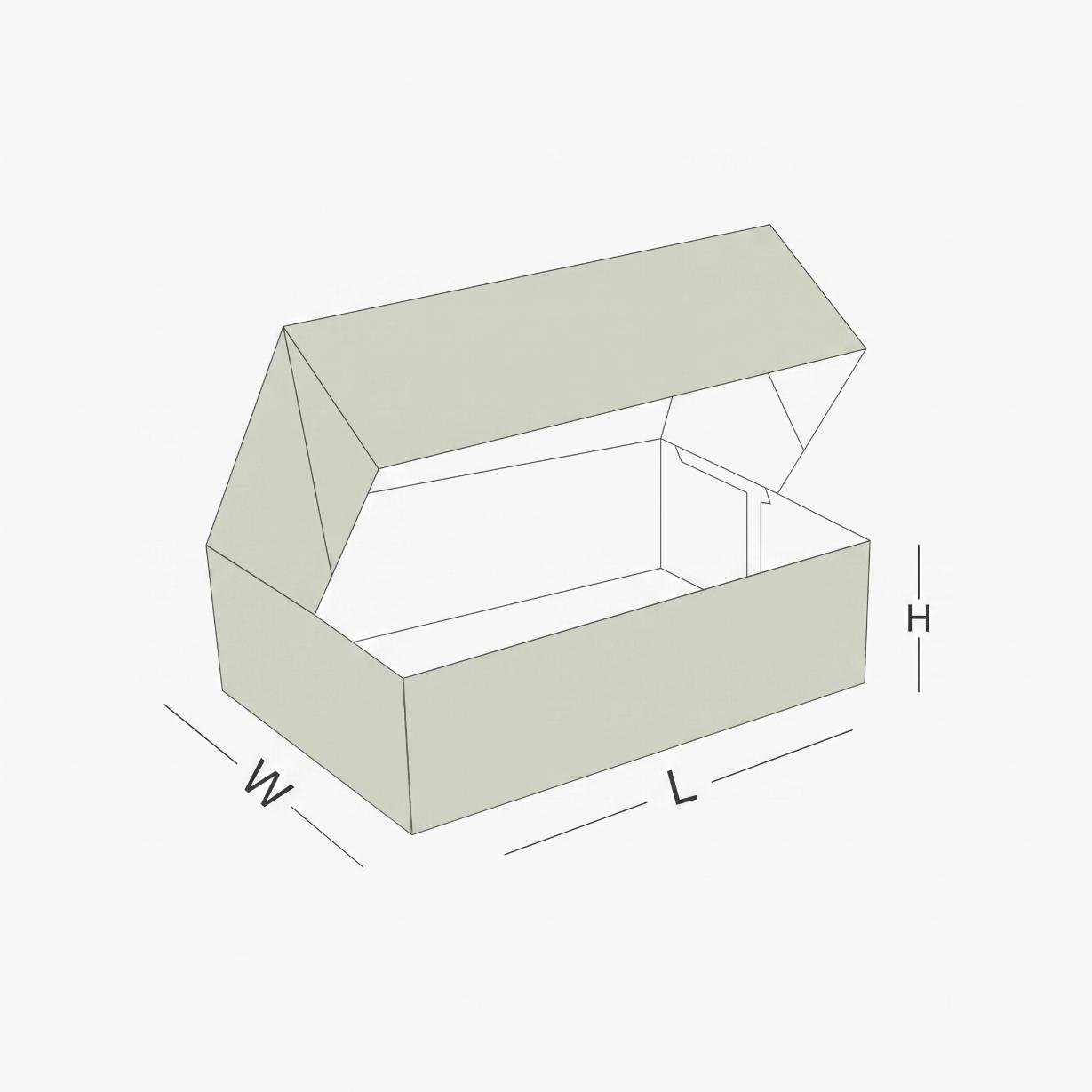

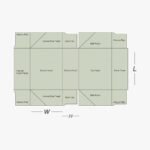













Description
Custom Four Corner Cake Boxes Built for Real Bakery Weight and Real Bakery Conditions
A thin-walled generic cake box works until it does not. The lid pops open on a delivery. The corners bow under a 5-pound celebration cake. Buttercream touches the lid and smears. The grease from a rich pound cake wicks through the board and turns the whole box into a damp, stained mess on the customer’s table.
Every one of those failures happens before the customer has even opened the box. Every one of them reflects on the bakery, not the box supplier.
Custom four corner cake boxes from Hexa Custom Boxes are built for the conditions a busy bakery actually operates in. Friction-lock corners that hold under weight. Food-safe and grease-resistant board options matched to what you bake. A tray and lid sized to protect the frosting without crushing it. Flat-shipping blanks that build in seconds during a morning rush and hold together through delivery.
What a Four Corner Cake Box Is and How the Corner Lock Works
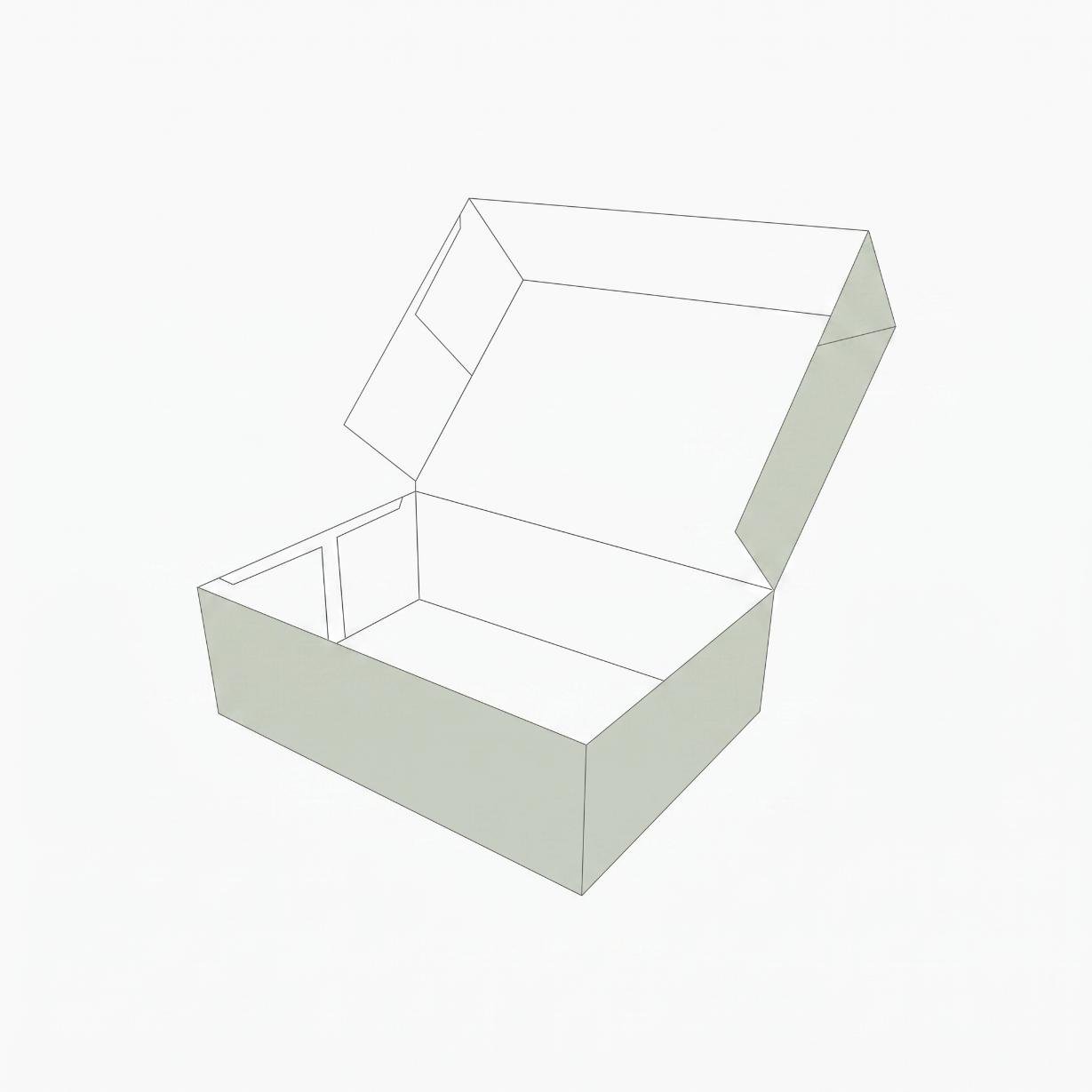
A four corner cake box is a fold-and-assemble tray-and-lid carton where each corner is formed by a triangular tab that folds inward and locks into a corresponding slot cut into the adjacent panel. That interlocking tab-and-slot is the friction lock that holds the box rigid without glue or tape.
Here is why the corner construction matters more than most buyers realize.
A cake box bears its load at the four vertical corner posts, not at the center of the lid or the base. When a box is lifted, stacked, or carried, the compression force travels down through those four corners. A well-formed friction-lock corner creates a rigid post at each corner of the box that transfers the load cleanly. A poorly locked or undersized corner buckles under weight, and when one corner buckles, the whole box loses its shape.
The triangular tabs also do a second job: they hold the side walls perpendicular to the base. Without them, the walls bow inward or outward under sidewall pressure, which is what causes frosting to smear against the side of the box during transit even when the lid clearance is correct.
The Height Rule: The Measurement That Protects Every Decoration
This is the detail that every competitor either skips or mentions once without explaining it, and it is the single most important sizing decision for a cake box.
The interior height of the box should be 2 to 3 inches greater than the height of the tallest element of the cake, including decorations, piping, toppers, and candle holders that might be pre-placed.
Here is why the margin matters:
- Frosting clearance: Buttercream and cream cheese frosting will touch and smear against any surface within about half an inch during transit vibration. A 2-inch overhead clearance keeps the decoration intact through a 30-minute delivery drive.
- Topper protection: Cake toppers, figurines, and floral decorations extend above the cake surface by varying amounts. The clearance must account for the tallest element, not the cake height alone.
- Lid closing force: A lid sized too close to the top of the cake requires downward pressure to close, which transfers directly to the decoration.
When you request a quote, give us the height of the cake including any decorations or toppers, not just the bare cake. We size the box to the full dressed height.
Grease Resistance: Matching the Board to What You Bake
Not all baked goods create the same demands on the board. Here is an honest breakdown of the options.
| Board Type | What It Handles | Best For |
|---|---|---|
| Standard SBS (uncoated or clay-coated) | Dry cakes, sponges, light pastries with minimal fat content | Simple celebration cakes, loaf cakes, light pastries |
| Clay-coated SBS | Light surface grease, short contact time | Most standard bakery products |
| PE-coated SBS | Direct grease and moisture contact, longer holding time | Rich buttercream cakes, mousse cakes, ganache-covered cakes |
| Kraft (uncoated) | Dry and semi-dry products, eco-forward look | Artisan bakeries, organic and natural brands |
| Kraft with PE liner | Oily or moist direct-contact products | Rich pastries, oily loaves, moist celebration cakes |
For most standard cake boxes, clay-coated SBS handles the job. For any cake with a high fat content, a wet ganache surface, or a moist crumb, specify PE-coated board. Wick-through grease staining on an uncoated board is a presentation failure that happens at the customer’s table, not yours, which is exactly why it damages the brand.
Window Panels: What No One Tells You About the Structural Tradeoff
A window panel is one of the most requested add-ons for a four corner cake box, and for good reason. Showing the cake through the lid is a powerful retail display tool and an effective impulse driver.
What almost no supplier tells you is that a large window cut into the lid removes material from the lid panel, and the lid panel is part of the structural system that distributes stacking load across the four corner posts. The larger the window, the less rigid the lid becomes, and the less compressive strength the assembled box carries.
For most single-cake deliveries and counter displays, this is not a problem. For stacked boxes, tall or heavy cakes, or any situation where multiple boxes are loaded onto a shelf or delivery tray, keep these points in mind:
- Keep the window away from the corners of the lid. The corner area is the load-bearing zone. A window that runs to the lid corners removes material from exactly the spot that carries weight.
- A PVC or PET window insert maintains some panel rigidity and protects the cake from condensation on the clear panel.
- For heavy cakes in windowed boxes, add a corrugated base insert to compensate for any reduction in overall box stiffness.
We can help you balance window size against structural requirements for your specific cake weight and stacking situation before the dieline is finalized.
Base Reinforcement: When to Add a Corrugated Insert
A standard SBS four corner cake box handles most bakery products reliably up to about 5 pounds with a correctly sized box and properly locked corners. Above that threshold, or for any cake on a long delivery route with significant handling, a corrugated base insert distributes the load across the full base footprint instead of concentrating it at the corner posts.
| Cake Weight | Base Recommendation |
|---|---|
| Under 3 lbs | Standard SBS base, no insert needed |
| 3 to 5 lbs | Standard SBS, ensure corners are fully locked |
| 5 to 7 lbs | Corrugated base insert recommended |
| Over 7 lbs or tiered cakes | Corrugated base insert required, consider B-flute box construction |
A corrugated insert also prevents base sag on heavier cakes where the board deflects under the weight of the cake at the center of the base panel, which causes the cake to tilt forward during carrying.
Four Corner Cake Box Styles: Choosing the Right Closure
| Style | How It Closes | Best For |
|---|---|---|
| Friction lock (this box) | Triangular tab-and-slot corners lock without glue, lid tucks or rests on tray | Counter display, takeaway, single delivery |
| Auto-lock (crash-lock) | Pre-glued base snaps open, faster assembly | High-volume bakery lines, morning rush |
| Self-lock cake box | Single-piece interlocking flaps, no separate lid | Cupcakes, pastries, lower-profile items |
| Magnetic closure cake box | Rigid box with magnetic lid, premium feel | Wedding cakes, premium gift, celebration |
For most bakeries, the friction-lock four corner is the right default. It is the fastest to assemble by hand, needs no glue, and gives a clean two-piece presentation with the lid lifting clearly away from the tray.
How to Assemble a Four Corner Cake Box (Step by Step)
Nobody explains this clearly. Here is the correct sequence.
- Start with the flat tray blank, printed side facing down.
- Fold all four side wall panels upward along the pre-scored crease lines.
- At each corner, fold the triangular tab inward and tuck it into the corresponding slot on the adjacent side wall panel. Press firmly until the corner sits square. Repeat for all four corners.
- Fold the two end flaps inward over the base to complete the tray floor.
- Place the cake in the tray on a cake board sized to the tray interior.
- Assemble the lid using the same corner-lock sequence.
- Lower the lid over the tray. It should sit snug with about 1 to 2mm of side clearance, enough to slide on and off cleanly without loose movement.
Total assembly time for the tray and lid: 20 to 30 seconds by hand. The corners will not release under normal carrying and delivery handling once they are properly locked.
Lid-to-Tray Fit: The Tolerance That Determines Whether the Box Seals
This is the spec detail that determines whether the lid keeps contamination out and stays on during delivery, and almost no competitor addresses it.
The lid interior should be 2 to 3mm wider and longer than the tray exterior on each side. That gives just enough clearance for the lid to slide on and off cleanly without finger pressure on the cake, but tight enough that the lid does not shift or lift during carrying.
A lid that is too loose allows air, humidity, and contamination to enter freely and can slide off during a delivery. A lid that is too tight requires downward force to close, which transfers directly to any frosting or decoration touching the lid interior.
When you send us your tray dimensions, we size the lid to the correct clearance tolerance and confirm the fit on the digital proof before production.
Print That Makes a Cake Box Work Harder Than a Container
A four corner cake box sits on the counter, travels through a delivery, and arrives at a celebration table. Every surface is a brand touchpoint.
- PMS spot-color matching and full CMYK for true-to-brand color
- Exterior print on all four tray walls and the full lid top and sides
- Interior base print for a branded reveal when the lid is lifted
- Spot UV and foil stamping on the lid top for premium shelf presence
- Matte or gloss lamination with food-safe coatings where required
- Die-cut windows with PVC or PET inserts for product visibility
- Custom cake board sizing to match the tray interior
Packaging Expert Tip: Put a Cake Board in Every Box, Not Just the Heavy Ones
Here is the move most bakeries make only for tiered and heavy cakes and should make for every cake they box.
A cake board sized to the interior base of the tray does three things. First, it distributes the weight of the cake evenly across the full base footprint so the cake does not deflect the base panel at the center and tilt during carrying. Second, it gives the cake a surface to slide on when the lid is lifted, so the customer can move the cake without touching it. Third, it protects the box base from direct contact with any moist or oily cake crumb, which extends the box’s presentation integrity through a delivery and a display period.
A standard 3mm greyboard or foil-covered cake board is inexpensive and adds less than a millimeter to the interior height when sized correctly. Factor the board thickness into the interior tray height when ordering so the lid clearance accounts for it.
What Every Hexa Order Includes
These terms apply to every order without exception or fine print:
- No die charges and no plate charges, zero hidden setup fees
- Low 100-box minimum for test runs or full production
- 8 to 10 business day turnaround from approved artwork
- Free dielines and ready-to-use templates
- Free 24/7 structural and print support from real packaging people
- 100% recyclable board stock on every order
A Cake Box That Protects the Frosting, Survives the Delivery, and Arrives Looking Like the Brand
Strong friction-lock corners, grease-resistant board matched to your product, correct height clearance for every decoration. One box that does everything a serious bakery needs. Ready in 8 to 10 business days.
Get your free quote today. No setup fees, low 100-box minimum, delivered in 8 to 10 business days.
- 👉 Request a Free Quote
- 📞 Talk to a packaging expert — free 24/7 support
- ✉️ Email us anytime: hello@hexacustomboxes.com