
















Description
Custom Sleeve Boxes: A Reveal Built Into the Structure
A standard folding carton opens. The lid tucks open, the product is inside, done. The opening is functional but not experiential.
A sleeve box adds a reveal. The sleeve slides, the tray emerges, and the product appears in a single deliberate horizontal motion. That motion is distinct from every other opening mechanism in packaging and it communicates something specific: premium, considered, and worth the moment of discovery.
Custom sleeve boxes from Hexa Custom Boxes are built around that reveal moment, engineered to the tolerance that makes it smooth, and designed for the three formats that serve different commercial purposes.
The Three Sleeve Box Formats: Which One Is Right
This is the format decision buyers need to make first and that no competitor explains clearly.
Format 1: Full Sleeve (Slipcover)
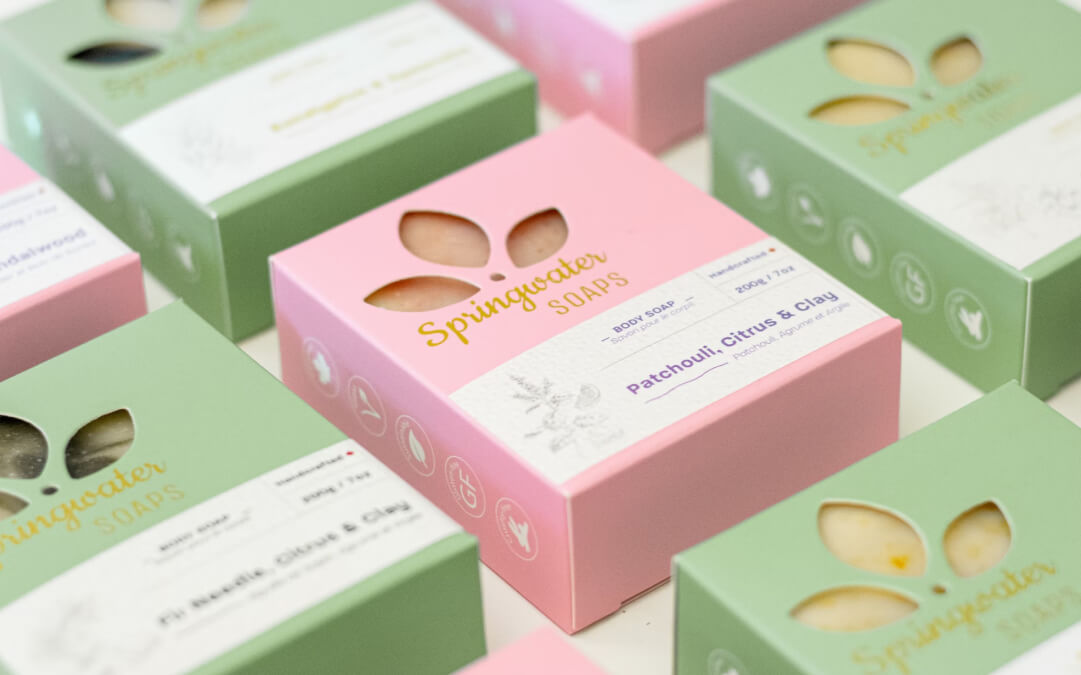
A continuous tube of board that slides completely over a product or an inner tray from one end. The sleeve covers all four sides and has no top or bottom panel. The product sits inside the sleeve or the inner tray slides out when the customer pulls it.
Best for: products with a clean silhouette that benefit from a full brand wrap, single products that do not need a separate tray, and any application where the sleeve itself is the primary packaging structure.
Format 2: Belly Band (Partial Sleeve)
A narrower strip of board that wraps around the center section of a product or an existing box without covering the top and bottom. It adds branding and tamper evidence without being a full enclosure.
Best for: adding seasonal branding to an existing plain box, bundling multiple items together with a single printed band, adding a tamper-evident seal with brand messaging, and the most economical way to customize a generic inner box per SKU without changing the inner box.
Format 3: Tray-and-Sleeve Drawer
A precisely fitted inner tray plus an outer sleeve. The tray holds the product and slides in and out of the sleeve in a controlled drawer motion. The sleeve stays and the tray moves.
Best for: premium gifting and retail where the reveal motion is part of the brand experience, multi-component kits where the tray organizes the product, and any product where the staged reveal creates the unboxing moment.
The Clearance Tolerance: The Specification That Determines Whether the Sleeve Works
This is the engineering detail that every competitor skips and that determines whether a sleeve box performs correctly in the customer’s hands.
The sleeve must fit over the tray or the product with enough clearance to slide smoothly, but not so much clearance that it rattles or slides off accidentally when the box is handled. The sleeve should fit snugly enough that the tray does not fall out when held horizontally, but loose enough to slide smoothly. The engineered tolerance is 0.5mm to 1mm for the perfect balance.
In practice:
0.5mm clearance per side: Appropriate for retail applications where the box will be opened and closed repeatedly by customers at point of sale. A slightly firmer fit prevents the sleeve from sliding off the tray during customer handling on the shelf.
1mm clearance per side: Appropriate for gifting applications where a single smooth reveal is the intent and the box will be opened once by the recipient. A slightly looser fit makes the reveal motion feel effortless and deliberate.
The tolerance also changes based on surface finish. Matte lamination and textured stocks create micro-friction against the tray surface, which acts like a tighter fit than the dimensional clearance alone would suggest. For matte-laminated sleeves, add 0.5mm to the calculated clearance to compensate for the surface drag. A gloss-laminated sleeve slides more freely than an unlaminated one, so the dimensional clearance can be at the tighter end of the range.
When you provide us with the tray dimensions and the intended sleeve finish, we calculate the correct clearance before the dieline is built. This is not a detail to adjust after production.
Reveal Direction: The Unboxing Motion the Sleeve Creates
This is the design decision nobody explains, and it determines the physical experience the customer has when opening the box.
Horizontal slide (most common for drawer format): The tray slides out from one end of the sleeve in a horizontal motion, like a drawer. The product appears progressively as the tray extends from the sleeve. This motion is the most distinctive and feels the most deliberate.
Vertical push-up (matchbox style): The tray is pushed upward through the open base of the sleeve by pressing from below, like a traditional matchbox. The product rises through the sleeve opening as the tray is pushed. Popular for small products, USB drives, jewelry, and compact retail items.
End-slide with full reveal: The tray slides completely out of the sleeve from one end, and the full product is revealed in a single motion when the tray clears the sleeve entirely. No progressive reveal, one complete reveal.
Choose the reveal direction based on the product and the brand moment. A full horizontal drawer slide communicates considered luxury. A vertical push-up communicates playful and functional. An end-slide with full reveal is clean and direct.
The SKU Flexibility Argument: Why Sleeve Boxes Save Money Across Product Lines
This is the commercial advantage that turns a sleeve box from a presentation format into an inventory and production strategy, and no competitor develops it.
The inner tray stays constant. The outer sleeve changes.
This means a brand with ten product SKUs can produce one standard inner tray in a single production run and ten different printed sleeves for each variant. The tooling cost for the tray is shared across all ten SKUs. Only the sleeve dieline and print changes per SKU.
The same principle applies to seasonal packaging: run a plain inner tray year-round and produce a Christmas sleeve, a Valentine’s Day sleeve, and a summer launch sleeve at lower quantities each without tooling a completely new box for each campaign.
This decoupling of structural production from branding production is the most cost-effective way to maintain packaging variety across a product line. A sleeve box is the only standard packaging format that structurally enables this, because the structural element (tray) and the branding element (sleeve) are literally separate objects.
Access Features: Helping the Customer Open the Sleeve
The sleeve reveal is only satisfying if the customer can initiate it comfortably. Access features make the opening motion easy without reducing the sleeve fit.
| Access Feature | How It Works | Best For |
|---|---|---|
| Pull tab | A die-cut tab on the tray edge extends beyond the sleeve opening, giving the customer a grip point to pull the tray | Most tray-and-sleeve formats: easy initiation of the drawer motion |
| Ribbon or string pull | A ribbon glued inside the sleeve or attached to the tray extends from the sleeve opening | Premium gifting and luxury retail: adds a deliberate, ceremonial quality to the reveal |
| Finger notch (thumb cut) | A die-cut semicircle in the sleeve base allows one finger to press the tray upward | Vertical push-up formats: natural and intuitive opening motion |
| Exposed tray edge | The tray is slightly longer than the sleeve depth, exposing an edge the customer grips | Simple and clean: no additional die-cut required |
A sleeve that fits too tightly may tear or scuff during packing. A sleeve with no access feature forces the customer to work to open the box. Match the access feature to the reveal direction and the brand tone.
The Insert Height Rule
This is the sizing specification that causes the most production problems with sleeve boxes and that no competitor addresses.
If a foam, cardboard, or molded pulp insert sits inside the inner tray, the total height of the insert plus the product on top of it must not exceed the interior height of the tray walls. If the insert lifts the product higher than the tray walls, the assembled tray-with-product-on-insert is taller than the sleeve interior, and the sleeve cannot slide over the tray.
An insert that sits too high prevents the sleeve from closing.
Before specifying the insert thickness, confirm: tray interior height minus insert height minus product height must equal zero or a small positive number (the overhead clearance). We calculate this as part of the tray and sleeve specification when you provide the product height, insert thickness, and tray wall height.
Sizing: Always Measure the Outside of What the Sleeve Wraps
The sleeve is always sized from the outside dimensions of the tray or product it slides over, not from the inside. A sleeve is measured by the outside dimensions of whatever it is wrapping.
To specify a sleeve correctly:
- Measure the outer width, outer depth, and outer height of the tray or product.
- Add the sleeve clearance (0.5mm to 1mm per side) to the width and depth.
- Specify the sleeve height (how deep the sleeve wraps around the tray) based on what portion of the tray should be covered.
- Specify the reveal direction to determine which end is open.
Skipping the clearance addition and specifying to the exact outer dimensions of the tray produces a sleeve that is too tight. Skipping a physical sample before production at this tolerance level is the most common source of sleeve box complaints.
Where Sleeve Boxes Earn Their Keep
| Application | Format | Why Sleeve Fits | Material |
|---|---|---|---|
| Luxury skincare and cosmetics | Tray-and-sleeve drawer | Staged reveal, product organized in tray insert | 18pt SBS or rigid board |
| Jewelry and accessories | Tray-and-sleeve drawer (vertical push-up) | Compact, premium, ribbon pull | 18pt SBS |
| Subscription box add-on | Belly band | Economical SKU branding on a plain inner box | 14 to 16pt SBS |
| Seasonal campaign packaging | Belly band or full sleeve | Sleeve changes per season, tray stays constant | 16 to 18pt SBS |
| Electronic accessories | Full sleeve or tray-and-sleeve | Clean wrap, product protected, premium shelf presence | 18pt SBS |
| Corporate gift sets | Tray-and-sleeve drawer | Organized kit in tray, branded sleeve, ribbon pull | 18 to 20pt SBS |
| Candles and home fragrance | Full sleeve | Full brand wrap, window option, premium retail | 18pt SBS |
| DTC subscription reveal | Tray-and-sleeve drawer | Reveal motion creates UGC moment | 18pt SBS |
| Tea and specialty food | Full sleeve over inner plain box | Sleeve per flavor or product, shared plain tray | 16pt SBS or kraft |
Material and Board Grade Options
| Material | Best For | Sleeve-Specific Note |
|---|---|---|
| 14pt SBS | Belly bands and lightweight full sleeves | Flexible, can crease if too wide without score |
| 16pt SBS | Standard retail full sleeves and belly bands | Good balance of rigidity and slide |
| 18pt SBS | Tray-and-sleeve drawers, premium full sleeves | Maintains shape through repeated open-close cycles |
| Kraft (uncoated) | Eco-forward, artisan, and DTC brands | Slightly higher surface friction than coated SBS |
| Rigid greyboard | Premium drawer-style sleeve boxes | Best structural feel, ships pre-assembled |
| E-flute corrugated | Heavy product applications, subscription outer | Corrugated tray with SBS sleeve is a common combination |
Packaging Expert Tip: Specify the Fit for One Open or Many Opens
Here is the tolerance decision that most buyers underspecify and that changes the sleeve’s performance across its intended use life.
A gifting sleeve box is opened once. The recipient experiences one reveal, one deliberate motion. For this application, the tolerance can be at the looser end of the 0.5mm to 1mm range. The slide feels smooth and effortless. The tray glides out without resistance. The experience is luxurious.
A retail sleeve box at the point of sale may be opened by ten or twenty customers before a purchase decision is made. For this application, the tolerance should be at the tighter end. A sleeve that slides too easily will fall off the tray when a customer picks it up on the shelf, which is a failure mode that happens on the shelf floor, not in the customer’s hands.
Tell us the intended use: single reveal for gifting, or repeated open-close for retail POS. We adjust the clearance tolerance accordingly. The difference is 0.5mm per side and it is the difference between a box that performs correctly in its intended context and one that disappoints in a way that cannot be corrected after production.
What Every Hexa Order Includes
These terms apply to every order without exception or fine print:
- No die charges and no plate charges, zero hidden setup fees
- Low 100-box minimum for test runs or full production
- 8 to 10 business day turnaround from approved artwork
- Free dielines and ready-to-use templates
- Free 24/7 structural and print support from real packaging people
- 100% recyclable board stock on every order
The Right Fit. The Right Reveal. The Right Format for the Brand and the Channel.
0.5mm to 1mm tolerance, calibrated to the finish and the use. Full sleeve, belly band, or tray-and-sleeve drawer, matched to the product and the moment. A reveal built into the structure.
Get your free quote today. No setup fees, low 100-box minimum, delivered in 8 to 10 business days.
- 👉 Request a Free Quote
- 📞 Talk to a packaging expert — free 24/7 support
- ✉️ Email us anytime: hello@hexacustomboxes.com