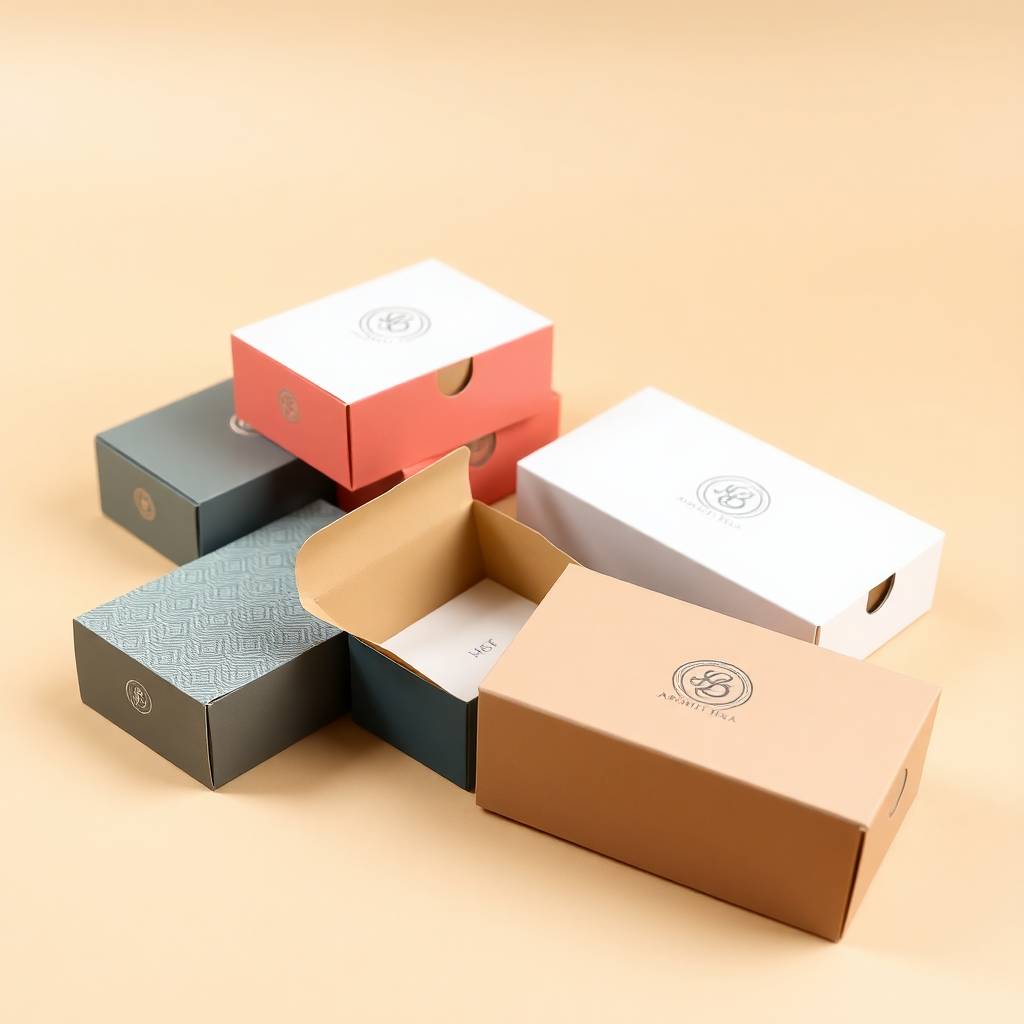













Description
Custom Side Lock Six Corner Boxes: Six Cuts, No Glue, No Tape, No Compromise at the Counter
A bakery counter moves fast. Boxes need to build in seconds, hold reliably through service, and carry no compliance question about adhesive near food. A glued box raises that question. A taped box creates a presentation problem. A side lock six corner box does neither.
The side lock mechanism uses six locking cuts on the two longer side walls, three at the base zone and three at the top lid zone, to hold the box closed without any adhesive. The cuts form tabs that fold outward or inward and engage the base panel and the lid panel mechanically. No glue anywhere in the construction. No tape anywhere in the service workflow.
Custom side lock six corner boxes from Hexa Custom Boxes are built in the two fundamental proportions the format allows: shallow format for wide, flat products like pizza, donuts, and pastry trays, and deep format for taller products like cakes, stacked pastries, and substantial bakery items. The proportion choice is as important as the mechanism.
The Six Locking Cuts Explained
This is the structural explanation every competitor offers as a name origin and none develops into a mechanism a buyer can understand and specify from.
A side lock six corner box has four walls when assembled: two longer side walls and two shorter end walls. The six locking cuts are all on the two longer side walls. Three on each side, six total.
Three cuts at the base zone (per longer side wall): These cuts form tabs that fold outward from the base of the longer side wall. When the box is assembled, these tabs fold under the base panel and engage it, locking the side wall to the floor of the box without glue. The base cannot separate from the side wall while these tabs are engaged.
Three cuts at the lid zone (per longer side wall): These cuts form tabs at the top of the longer side wall that fold inward or outward to engage the lid panel when the lid is closed. The lid tabs lock the lid closed without tape, holding the lid in its closed position through carry and stacking.
The six corner name comes from these six engagement points on the two sides. The box has four visible corners when assembled, the same as any rectangular box. The six refers to the six structural locking points created by the die-cut mechanism on the two longer walls.
Side Lock vs Regular Six Corner: The Same Name Family, Different Mechanisms
The regular six corner and the side lock six corner both have six structural engagement points and both build without adhesive. The mechanism is different.
| Feature | Side Lock Six Corner | Regular Six Corner |
|---|---|---|
| Where the lock is | Six cuts on the two longer side walls | Pre-glued corner tabs at all four corners |
| Lock type | Die-cut tab engagement: glue-free interlocking | Pre-glued corner posts: factory-applied adhesive |
| Glue at factory | None | Corner tabs glued at factory before flat-shipping |
| Glue at packing | None | None (glue already applied) |
| Base engagement | Side wall tabs fold under base panel | Pre-glued tab bonds corner and base |
| Best for | Food service, bakery, any application where glue-free is preferred | Retail gifting, apparel, applications where pre-glued corner posts give faster assembly |
| Temperature performance | Glue-free: no adhesive to soften under heat or cold | Pre-glued: adhesive bond may soften under sustained temperature change |
The side lock is the right choice for food service and bakery applications where a completely adhesive-free construction is the preference. The regular six corner is the right choice where the pre-glued corner post gives a faster, more rigid assembly and the product is not in direct contact with the box interior.
The Depth-to-Base Ratio: Shallow vs Deep and Which Products Each Fits
This is the structural dimension that determines whether a side lock six corner box works for the product, and every competitor mentions it in one sentence without developing it into buyer-useful guidance.
The side lock six corner box can be made in any proportion of base dimensions to wall height. The proportion determines which products fit correctly and how the box performs in service.
Shallow format (wide base, short walls):
The base is significantly wider and longer than the wall height. The box presents as a tray-like carrier where the product is wide and flat relative to the box footprint.
Right products: whole pizzas and flatbreads, large donut assortments, quiche and tart, pastry trays, sandwich platters, large cookie sheets.
The shallow format is the folding carton alternative to the standard corrugated pizza box for artisan and upscale food service brands that want a premium folding carton aesthetic without the corrugated look. A 12-inch pizza fits in a shallow side lock six corner box in 18pt SBS that presents significantly more elegantly at a restaurant counter than a standard corrugated box.
Deep format (taller walls, proportionally narrower base):
The wall height is significant relative to the base dimensions. The box presents as a tall, structural carrier where the product has meaningful height.
Right products: single and multi-layer cakes, assembled pastry towers, stacked donuts, tall cupcake sets, apparel folded items, gift sets with height.
The deep format is the bakery box standard for items that need wall height to prevent frosting contact with the lid. Deeper boxes with smaller sides are perfect for food products like pastries and hot or cold cakes.
Sizing rule: For most products, the wall height should be at least one-third the shorter base dimension to maintain side lock structural stability. Below that ratio, the locking tabs have insufficient wall area to engage cleanly. Above two-thirds the shorter base dimension, the box begins to read as deep rather than shallow and suits the deep-format products listed above.
Glue-Free Construction: The Food Service Advantage Nobody Develops
Every competitor mentions no glue as a feature. Nobody explains why it matters in a food service context.
Standard folding carton boxes use adhesive at the factory-glued corner tabs or at the packing line to close the top. That adhesive is food-safe in most commercial formulations, but it introduces two practical considerations for food service operations.
First, any adhesive near food raises a compliance question that varies by jurisdiction, inspection regime, and food safety certification. A box with zero adhesive anywhere in its construction has no compliance question to answer. For food service operations operating under strict food safety programs, glue-free simplifies the packaging audit.
Second, at a busy bakery or food service counter, the packing team is loading, closing, and handing off boxes in seconds. A box that builds and closes with no adhesive application step is faster than one requiring glue or tape at any point in the workflow.
The side lock six corner box assembles by hand with no adhesive needed at any stage. The six locking cuts engage mechanically. The lid closes by tucking the three tab locks. No glue gun at the counter. No tape dispenser. Just the box and the product.
Where Side Lock Six Corner Boxes Earn Their Keep
| Product | Format | Why Side Lock Fits | Material |
|---|---|---|---|
| Whole pizza (10 to 14-inch) | Shallow | Wide base, short walls, no adhesive near food | 18pt SBS or kraft |
| Donut assortment (6 to 12 pieces) | Shallow | Wide base displays product, glue-free food-safe | Food-safe SBS |
| Quiche and tart (9-inch) | Shallow | Wide base, moderate depth | 18pt SBS |
| Single-layer cake (6 to 8-inch) | Deep | Wall height protects frosting, no glue | 18 to 20pt SBS |
| Multi-layer cake (8 to 10-inch) | Deep | Full wall depth, cake height clearance | 20pt SBS |
| Pastry assortment (mixed height items) | Deep | Wall depth protects taller pastries | 18pt SBS |
| Apparel (folded shirt or knitwear) | Deep | Clean box aesthetic, no adhesive | 18 to 20pt SBS |
| Gift set (candles, cosmetics) | Deep | Rigid presentation, glue-free for premium feel | 18 to 20pt SBS |
| Artisan sandwich platter | Shallow | Wide base, food-safe no-adhesive | Food-safe SBS or kraft |
Food Safety for Side Lock Six Corner Boxes
For dry bakery products not in direct contact with the box interior: standard food-adjacent SBS or kraft is appropriate.
For products in direct contact with the box interior (pizza touching the base, donut touching the side wall, pastry contacting the base panel): specify a food-safe PE-coated or clay-coated SBS. The coating prevents any grease or moisture from the food from wicking into the board, which would otherwise soften the panel and reduce the engagement of the locking tabs over the service period.
For warm food placed directly into the box: confirm the board spec before ordering. A PE-coated or moisture-resistant board maintains its stiffness and the locking tab engagement through a warm carry period. Uncoated SBS softens under sustained heat and moisture from warm food.
How to Assemble a Side Lock Six Corner Box
Nobody explains the correct assembly and lid-closing sequence for this format. Here is exactly how it goes together.
Assembling the base:
- Start with the flat blank, printed side facing out.
- Fold the two shorter end walls upward.
- Fold the two longer side walls upward.
- At the base of each longer side wall, fold the three base tabs outward and under the base panel. Press firmly until each tab engages the base panel slot.
- The base and four walls are now locked. The box stands rigid with no adhesive.
Loading the product: 6. Place the product in the open-top tray.
Closing the lid: 7. Bring the lid panel down over the product. 8. At each longer side of the lid, fold the three lid tabs inward or downward to engage the lid lock slots. 9. Press each set of lid tabs until they click into the lock slots. 10. The lid is now closed and secured by the six lid tab engagements. No tape required.
Total assembly time: 20 to 25 seconds by hand. No adhesive, no tape, no tools.
Board and Material Options
| Material | Best For | Notes |
|---|---|---|
| 18pt SBS (white coated) | Most bakery, retail, and food service applications | Best print surface, food-adjacent safe |
| 20pt SBS | Heavier cakes, premium gifting, deep-format applications | More rigid side wall for taller configurations |
| Kraft (uncoated) | Artisan, organic, eco-forward bakery and food brands | Natural look, food-compatible, recyclable |
| Food-safe coated SBS | Direct food contact with grease or moisture | PE or clay coating prevents wick-through |
| E-flute corrugated | Heavier products, pizza at delivery scale, items over 1kg | Best base rigidity for heavy loads |
Print That Uses Every Panel
A side lock six corner box has four exterior wall panels, a lid exterior top, and lid side panels.
- PMS spot-color matching and full CMYK for brand-accurate bakery and retail color
- Full bleed print on all four side walls and the lid for complete shelf and counter presence
- Spot UV on the lid top for retail display impact
- Foil stamping for premium gifting and upscale bakery positioning
- Matte or gloss lamination for scuff resistance through counter service
- Window die-cut on the lid top or front panel positioned away from lid tab lock zones
- Food-safe inks for any box in direct food contact application
Packaging Expert Tip: Spec the Depth First, Then Match the Base
Here is the sizing sequence that most bakery and food service buyers reverse, and it is the one that determines whether the side lock six corner box works for the product.
Most buyers specify the base dimensions first: the pizza is 12 inches, so they want a 12-inch base. Then they specify the wall height. This sequence works for shallow formats where the base dimension drives everything.
For deep formats with significant wall height, the sequence should start with the depth requirement, not the base.
Start with the question: how tall is the product including all decorations, toppings, and lid clearance? That is the minimum wall height. Then add the depth rule: make sure the wall height is at least one-third the shorter base dimension for the locking tabs to engage cleanly. Then confirm the base dimensions to the product footprint.
For a cake that is 120mm tall after decoration, the minimum wall height is 120mm plus 25mm frosting clearance, giving 145mm. The shorter base dimension should be at least 435mm for the one-third ratio, which would be an extremely wide box. In practice, most cakes have a footprint smaller than this ratio implies, so the real guidance is: if the wall height exceeds one-half the shorter base dimension, increase the board weight to 20pt SBS to ensure the locking tabs maintain their engagement under the product load.
Spec the depth first. Confirm the base. Adjust the board weight for the depth-to-base ratio. That sequence produces a box that holds its shape through the full service period.
What Every Hexa Order Includes
These terms apply to every order without exception or fine print:
- No die charges and no plate charges, zero hidden setup fees
- Low 100-box minimum for test runs or full production
- 8 to 10 business day turnaround from approved artwork
- Free dielines and ready-to-use templates
- Free 24/7 structural and print support from real packaging people
- 100% recyclable board stock on every order
Six Locking Cuts. No Glue. No Tape. Any Depth Your Product Needs.
Shallow for pizza, donuts, and pastry trays. Deep for cakes, pastries, and stacked products. Adhesive-free from the factory to the counter, in whatever proportion the product and the brand require.
Get your free quote today. No setup fees, low 100-box minimum, delivered in 8 to 10 business days.
- 👉 Request a Free Quote
- 📞 Talk to a packaging expert — free 24/7 support
- ✉️ Email us anytime: hello@hexacustomboxes.com