













Description
Custom Seal End Boxes: The Glued Closure That Makes Food, Pharma, and High-Volume Retail Packaging Work
A standard tuck-end folding carton is the most economical choice for most retail applications. The flap tucks into a slot, friction keeps it closed, and the box does its job for light retail products in moderate conditions.
Seal end boxes exist for when that is not enough.
When a product needs to stay sealed through a full distribution journey without any chance of the top opening under vibration. When contamination through the corner gaps of a tuck-end is a food safety or pharmaceutical compliance risk. When a packing line is running hundreds of units per minute through a high-speed cartoning machine and needs a closure the machine can apply reliably without human intervention.
Custom seal end boxes from Hexa Custom Boxes are built for those applications. Glued closure panels that hold without friction. Dust flaps that seal the side gaps before the main panels close. A construction designed for both hand assembly at lower volumes and automated cartoning at scale.
Single Seal End vs Full Seal End: The Format Decision Nobody Explains
This is the naming confusion that causes more seal end box ordering errors than any other issue, and no US competitor page addresses it clearly.
Seal end boxes come in two fundamentally different configurations. Choosing the wrong one means getting a box with the wrong closure format for the application.
| Format | How It Closes | Best For |
|---|---|---|
| Single seal end | One end sealed with glued closure panels and dust flaps. The other end closes with a standard tuck flap. | Applications where one sealed end provides sufficient security and the tuck end allows easy product loading or customer opening |
| Full seal end (both ends sealed) | Both ends sealed with glued closure panels and dust flaps. No tuck flap on either end. | Maximum security, tamper-evident both ends, food and pharmaceutical applications requiring complete enclosure |
The single seal end is more common for retail applications where the sealed end provides the security for the base during filling and distribution, and the tuck end allows easy customer opening. The full seal end is the format for food, pharmaceutical, and high-security applications where both ends must be sealed and the box is opened by tearing rather than tucking.
The cereal box is the classic single seal end: the base is factory-sealed during filling, and the top tucks open for the consumer. The pharmaceutical blister carton is often a full seal end: both ends sealed at the factory, with a perforated tear strip for consumer opening.
The Dust Flap: The Feature That Makes a Seal End Genuinely Gapless
This is the structural feature that every competitor mentions and none explains.
A standard tuck-end box has a gap at each of the two top corners where the tuck flap meets the side walls. These gaps are inherent in the tuck-end construction: the tuck flap cannot reach fully into the box corners, so small openings remain. For most retail products, these gaps are irrelevant. For food, pharmaceutical, and fine-particle sensitive products, they are the contamination entry point.
A seal end box addresses this with dust flaps. The closure sequence works as follows:
First, the two short dust flaps on the narrow sides of the box fold inward. These flaps extend into the corners of the box opening and seal the side gaps before the main closure panels are applied.
Second, the interior closure panel folds inward from the back wall of the box, covering the dust flaps and the center of the opening.
Third, the exterior closure panel folds inward from the front wall of the box, overlapping the interior panel fully across the width of the opening.
Fourth, the glue between the overlapping panels bonds them together, sealing the full closure panel across the complete width of the box end, with the dust flaps having already sealed the corners.
The result: no gaps at any point across the sealed end. The seal end name refers to the end of the box being fully sealed, not just closed.
Seal End vs Tuck End: The Closure Comparison
| Feature | Tuck-End Closure | Seal End Closure |
|---|---|---|
| Closing mechanism | Single flap tucks into a die-cut slot | Dust flaps, interior panel, and exterior panel overlap and seal |
| Corner gaps | Yes: inherent in tuck-end construction | No: dust flaps seal corners before main panels close |
| Security | Friction only | Glue bond across full panel width |
| Tamper evidence | None: tuck can be re-tucked | Yes: glue must be torn to open, visible if tampered |
| Contamination resistance | Gaps allow dust and fine particle entry | No entry point when dust flaps and panels are sealed |
| Machine compatibility | Tuck-end requires specific cartoner or hand tuck | Seal end compatible with horizontal and vertical cartoning machines |
| Consumer opening | Easy: pull the tuck flap | Designed for tear-open or scored perforation opening |
| Best for | Light retail, economical, moderate conditions | Food, pharma, high-volume, tamper-sensitive, contamination-sensitive |
High-Speed Cartoning Machine Compatibility
This is the commercial advantage of the seal end format that no competitor page develops, and it is the reason the format dominates high-volume food and pharmaceutical packaging.
Seal end boxes are specifically designed to be glued shut at both ends by high-speed machinery. Horizontal cartoning machines load the product through the open end of the box, apply the dust flaps, and then apply the closure panels with a glue bead in one continuous motion. Vertical cartoning machines load from the top and seal the base, then fill and seal the top.
The seal end closure sequence: dust flaps close, interior panel folds, exterior panel folds over, glue bead bonds. This four-step sequence is mechanically consistent and repeatable at high speed in a way that a tuck-end closure is not. A tuck-end requires a specific tucking action that is harder to perform reliably at very high machine speeds without occasional mis-tuck.
For packing lines running more than 60 to 80 cartons per minute, the seal end format is the industry standard precisely because it performs reliably at speed. The glue application is consistent, the closure panels overlap fully every time, and the sealed carton emerges from the machine ready for distribution without any human checking or re-tucking.
When you specify a seal end box for an automated line, tell us the machine type (horizontal or vertical), the carton feed direction, and the machine speed in cartons per minute. We design the dieline to the machine specifications before production.
The Cereal Box Archetype: Why the Seal End Became the Food Packaging Standard
The seal box is most commonly seen in the cereal and cracker aisles of grocery stores. This is not accidental.
The cereal box format is a single seal end carton filled on a vertical form-fill-seal or cartoning line at very high speed. The base is sealed at the factory during filling. The top tucks closed for consumer use, allowing easy re-closure between servings. The sealed base prevents the contents from pushing through at the base or contaminating at the base during distribution. The tuck top allows the consumer to open and re-close the box repeatedly.
This combination of a sealed base for distribution security and a tuck top for consumer convenience is the design logic that made the seal end the standard for food packaging. The same logic applies to:
- Cereal, granola, and dry food cartons (sealed base, tuck top)
- Frozen food cartons (sealed base or full seal for freezer storage)
- Pharmaceutical blister cartons (full seal, tear-open for tamper evidence)
- Tissue box formats (sealed sides, perforated tear-open top)
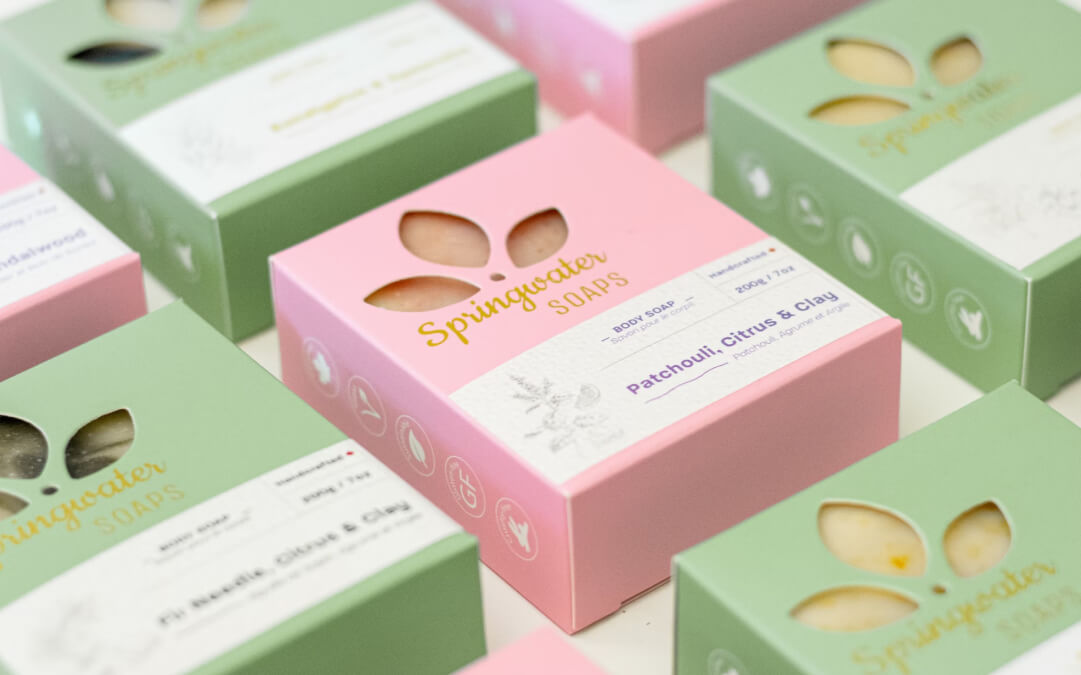
- Soap and detergent cartons (full seal for moisture protection)
The format fits these applications because the glued closure holds through temperature changes, humidity, and the mechanical stress of distribution that a tuck-end cannot reliably sustain.
Where Seal End Boxes Earn Their Keep
| Application | Why Seal End Fits | Format | Material |
|---|---|---|---|
| Cereal and dry food retail | High-volume cartoning line, sealed base during filling, tuck top for consumer | Single seal end | Food-safe SBS |
| Pharmaceutical blister carton | Both ends sealed for tamper evidence, perforated tear-open | Full seal end | 18pt SBS |
| Frozen food carton | Sealed ends resist moisture and temperature stress in freezer storage | Full seal end | Moisture-resistant SBS or coated board |
| Tissue and wipe cartons | Sealed construction with perforated or die-cut top opening | Full seal end or single | SBS or kraft |
| Soap and detergent bar packaging | Moisture-resistant sealed ends | Full seal end | SBS or kraft |
| Supplement and nutraceutical cartons | Tamper-evident sealed ends, machine filling at volume | Full seal end | 18pt SBS |
| Cosmetics and beauty (high volume) | Machine-compatible filling, sealed base for security | Single seal end | 18pt SBS |
| Medical device secondary packaging | Tamper-evident full seal, FDA-compliant materials | Full seal end | FDA-compliant SBS |
Opening Methods for Sealed End Cartons
A sealed end carton cannot be tuck-opened like a tuck-end box. The opening method is specified as part of the dieline and must be designed before production.
| Opening Method | How It Works | Best For |
|---|---|---|
| Perforated tear strip | A perforated line across the sealed panel allows a clean tear-open | Pharmaceutical, supplement, food: tamper-evident tear |
| Die-cut perforation | A tear-along-dotted-line perforation creates a controlled opening | Consumer retail: easy open on the first use |
| Finger push-in opening | A die-cut tab the consumer pushes inward to break the seal | Tissue cartons, convenience foods |
| Full tear-open | No perforation: the consumer tears through the sealed panel | Fully tamper-evident where reseal is not expected |
| Reseal tape | A strip of resealable tape applied over the sealed closure allows closure after first opening | Dry food, snack, cereal: resealability after open |
For most retail applications, a perforated tear strip or die-cut perforation is the right opening design. For pharmaceutical and tamper-evident applications, a full tear-open or a perforated tear strip that cannot be replaced after removal is the correct specification.
Material and Board Grade Options
| Material | Best For | Notes |
|---|---|---|
| 18pt SBS | Pharmaceutical, cosmetics, supplements, most retail | Standard for folding carton seal end applications |
| 20pt SBS | Heavier products, premium retail, products requiring rigidity | More substantial panel, holds sealed closure better under weight |
| Food-safe coated SBS | Direct food contact applications | PE or clay coating, food-safe adhesive for glued closure |
| Moisture-resistant SBS | Frozen food, refrigerated products, humid environments | Resists moisture absorption at temperature transitions |
| Kraft (uncoated) | Natural, artisan, eco-forward food and soap brands | Glue-seal compatible, recyclable |
| E-flute corrugated | Heavier or fragile products requiring transit protection | Seal end principle applied to corrugated construction |
Print for Seal End Boxes
A seal end box has four full side panels, a sealed end exterior (base or lid), and an open or sealed second end. All surfaces are printable.
- PMS spot-color matching and full CMYK for accurate retail color
- Full bleed print on all four side panels for shelf and display impact
- Spot UV on front panel logo and key brand elements
- Foil stamping for premium food, pharmaceutical, and beauty positioning
- Matte or gloss lamination for scuff resistance through distribution
- Perforated tear strip or die-cut opening integrated into the print design
- Food and pharmaceutical-safe inks throughout for compliant applications
Packaging Expert Tip: Design the Opening Before the Closure
Here is the design sequence most brands reverse on seal end boxes, and it is the sequence that determines whether the box is easy and satisfying to open or frustrating and damaging.
The closure is designed first on most seal end box briefs: seal both ends, glue the panels, done. The opening is specified after, often as an afterthought: “add a tear strip.”
The opening should be designed first. A seal end box that is opened by the consumer must tear cleanly, in the right place, without requiring excessive force or tearing through the product graphics in an unpredictable direction. A pharmaceutical carton that tears in the wrong place admits contamination on first use. A cereal box that tears through the brand graphic on the front panel damages the shelf-facing presentation on the most visible surface.
Specify the opening method, the perforation position, and the force required before the closure and print are designed. Then design the closure to work with the specified opening. Then design the print to incorporate the opening element visually: a tear strip can be designed into the brand graphic so it reads as part of the packaging rather than an afterthought overlaid on it.
This sequence: opening specification, closure design, print design. It produces a seal end box that opens cleanly and looks considered rather than one where the opening is a functional problem printed over.
What Every Hexa Order Includes
These terms apply to every order without exception or fine print:
- No die charges and no plate charges, zero hidden setup fees
- Low 100-box minimum for test runs or full production
- 8 to 10 business day turnaround from approved artwork
- Free dielines and ready-to-use templates
- Free 24/7 structural and print support from real packaging people
- 100% recyclable board stock on every order
Glued Closed at Both Ends. Gapless. Tamper-Evident. Machine-Compatible.
The folding carton format that runs every cereal aisle, every pharmaceutical shelf, and every high-volume food packing line for exactly these reasons.
Get your free quote today. No setup fees, low 100-box minimum, delivered in 8 to 10 business days.
- 👉 Request a Free Quote
- 📞 Talk to a packaging expert — free 24/7 support
- ✉️ Email us anytime: hello@hexacustomboxes.com