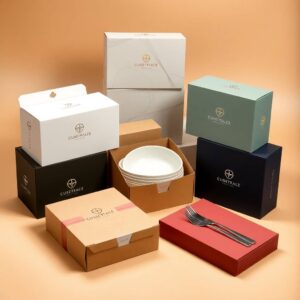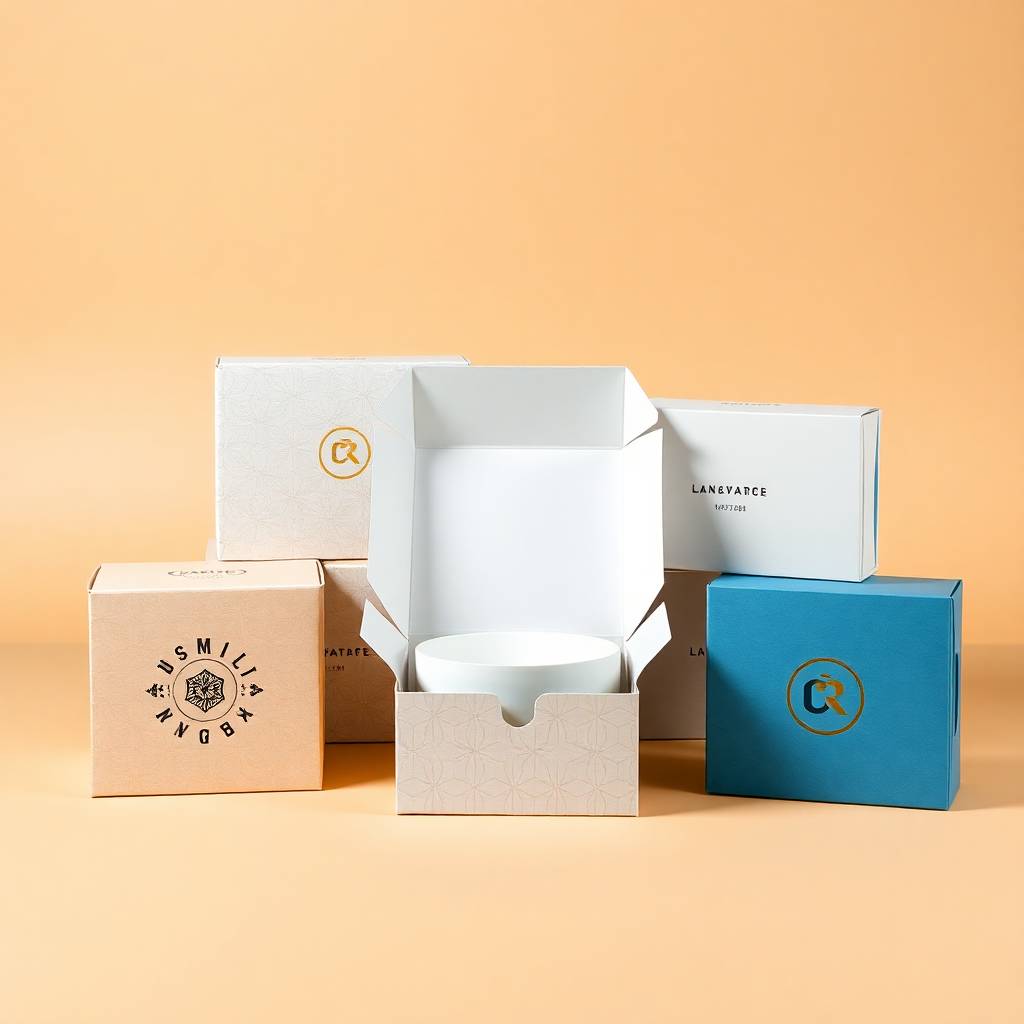














Description
Custom Christmas Candy Boxes: The Format and the Coating Both Have to Match the Candy
A Christmas candy box that looks beautiful on the outside and fails to protect the candy inside is the definition of a packaging problem. Bloomed chocolate, sticky caramel, or moisture-soft gummies are not the result of bad candy. They are the result of a box that was not specified for the candy type.
Every type of Christmas candy has a specific moisture, grease, and light sensitivity profile. The box that protects a hard candy is not the box that protects a chocolate truffle. The coating that keeps a caramel from sticking to the board is not the same coating that prevents a gummy from drying out against the package wall.
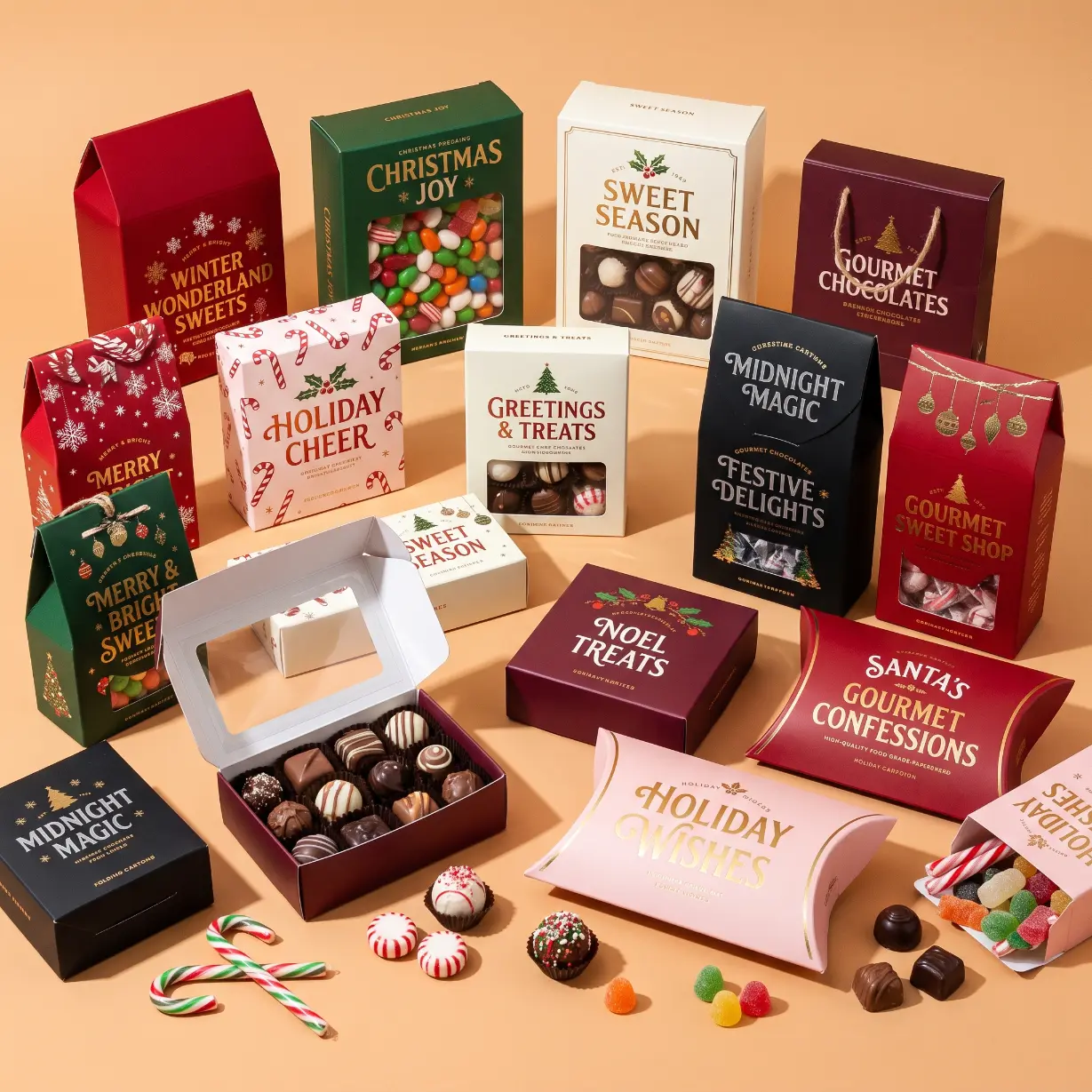
Custom Christmas candy boxes from Hexa Custom Boxes are built from the candy type outward: format, coating, and size matched to what the candy actually needs, with Christmas seasonal print that communicates the occasion before the box is opened.
The Candy-Type-to-Barrier-Coating Match
This is the food safety specification that determines whether the candy arrives in perfect condition or disappoints, and it is the most technically important decision in Christmas candy box ordering. No US supplier Christmas candy page provides this matching guide.
| Candy Type | Primary Barrier Requirement | Recommended Coating | Why |
|---|---|---|---|
| Hard candy (mints, candy canes, lollipops) | UV blocking and humidity control | UV-resistant laminate or aqueous coating with moisture barrier | Hard candy absorbs humidity and becomes sticky. UV exposure accelerates color fade and sugar crystallization |
| Gummies and jellies | Moisture seal | Moisture-barrier coating or PE-coated interior | Gummies lose moisture to the ambient environment through uncoated board, becoming dry and chewy over time |
| Caramel and toffee | Grease and moisture barrier | PE-coated or clay-coated food-safe board | Caramel oil migrates through uncoated board, staining the exterior and potentially softening the panel. Moisture causes sticking |
| Chocolate and truffles | Temperature stability, no excess moisture | Uncoated interior (coatings can transfer flavor) or neutral food-safe coating | Chocolate blooms when exposed to temperature fluctuation and humidity. The board should not contribute moisture or aroma. Avoid PE coatings that may off-gas |
| Fudge and nougat | Moisture barrier to prevent drying | PE-coated or wax-treated board | Fudge and nougat dry out against uncoated board at low humidity, losing texture |
| Mixed assortments (multiple candy types) | Broadest barrier specification for the most sensitive candy in the mix | PE-coated food-safe SBS throughout | When chocolate is in the mix, the chocolate requirement sets the specification for the full box |
For any Christmas candy box containing multiple candy types, specify the coating for the most sensitive candy in the assortment.
The Five Christmas Candy Box Formats and Which Candy Each Fits
Pillow Box
The curved tucked ends create the signature pillow shape. Self-closing without glue or tape. Ideal for small individually wrapped candies: foil-wrapped chocolates, hard candy rounds, single-serve mint packs.
Christmas application: Party favors, stocking stuffers, place setting gifts at Christmas dinner tables. The curved ends allow a short ribbon to be tied through each end for a finished gifting look.
Right for: individually wrapped hard candy, foil-wrapped chocolates, small candy assortments of three to five pieces.
Window Tuck Box
A standard tuck-end folding carton with a clear PET window die-cut in the front panel. The window shows the candy inside before opening, which is the retail display driver for colorful candy assortments.
Christmas application: Retail shelf candy assortments, gummy bear holiday packs, mixed hard candy selections, candy cane bundles. The window is positioned to show the most visually appealing candy at the front of the box.
Right for: gummies, mixed hard candies, candy cane bundles, any colorful candy where visual appeal drives the purchase.
Ballotin (Folded lid-and-base for confectionery)
The traditional confectionery box format used for premium chocolates and truffles. A separate base tray holds the candy in individual compartments and a separate lid lifts off to reveal the full assortment.
Christmas application: Premium chocolate and truffle gift sets, artisan candy collections, corporate Christmas gifting. The compartmentalized base keeps each piece in position and prevents contact between pieces during transit.
Right for: premium chocolates, truffles, pralines, and any high-value candy assortment where presentation is as important as protection.
Gable Bag
The built-in handle makes the gable bag self-contained for carry: no separate ribbon, bag, or carrier needed. The front and back panels carry the Christmas print. The base holds the candy securely during carry.
Christmas application: Christmas party candy bags, teacher holiday gifts, neighbor cookie-and-candy packs, event favor stations. The gable bag handles the carry so the recipient does not need a separate bag.
Right for: mixed candy assortments, cookie-and-candy combinations, anything that needs to be handed off at a party or carried from a table.
Tube Box
A cylindrical tube structure, typically with a separate lid at the top and a sealed base. The tube format naturally fits candy canes, stacked round chocolates, and individually wrapped cylindrical candies.
Christmas application: Candy cane presentation tubes, stacked chocolate disc sets, individually wrapped mint rolls, truffles in a tower format. The tube is one of the most distinctive Christmas gift formats because of its vertical profile.
Right for: candy canes, stacked round candies, any cylindrical or stackable confectionery format.
Three Size Categories and Their Applications
| Size Category | Typical Contents | Best Use Case |
|---|---|---|
| Single serve (1 to 3 pieces) | One chocolate, two truffles, three mints | Place setting favor, stocking stuffer, thank-you candy, single-serve party favor |
| Multi-piece assortment (4 to 12 pieces) | Small gift selection, mixed assortment, 6-count truffle box | Christmas gift to an individual, neighbor gift, office party favor, client gift |
| Bulk gifting set (12 to 50+ pieces) | Family assortment, large corporate gift, full season supply | Corporate Christmas candy program, family holiday gift, charity donation box |
For corporate Christmas candy programs where the same box is sent to hundreds or thousands of clients, the multi-piece assortment format is the standard: substantial enough to feel like a genuine gift, sized for a reasonable per-unit cost at volume.
Christmas Candy Retail: FDA Labeling Requirements
For any Christmas candy box going into retail sale (store shelves, online retail, gift shop), the outer packaging must carry FDA-required food labeling information.
Required on retail Christmas candy packaging:
- Product name
- Net weight (in ounces and grams)
- Full ingredient list in descending order by weight
- Allergen declaration (contains statement for Big 9 allergens: peanuts, tree nuts, milk, eggs, wheat, soy, fish, shellfish, sesame)
- Manufacturer or distributor name and address
- Nutrition facts panel for most packaged food products
For holiday candy gift boxes sold direct to consumer by the maker (a chocolatier selling directly at a market or online): some exemptions may apply depending on the production volume and distribution method. Confirm with the relevant regulatory authority before production.
The outer box panel layout must reserve space for all required labeling before the Christmas design artwork is briefed. Most brands allocate the full back panel or a dedicated side panel to FDA compliance copy.
Temperature Sensitivity in December: The Christmas-Specific Risk
Christmas candy is displayed and transported in conditions that other seasonal candy is not. December retail environments alternate between heated stores and cold outdoor temperatures. Delivery vehicles cycle between warm warehouses and cold exteriors. A gift carried from a warm house into a cold car and back into a warm venue in a single evening experiences significant temperature variation.
Chocolate is the most temperature-sensitive Christmas candy. It blooms (develops a white or grey surface haze from cocoa butter or sugar crystal migration) when exposed to temperature changes that cause partial melting and resolidification. A chocolate truffle gift box left in a cold car for two hours and then brought into a warm house is at bloom risk.
Two practical interventions:
First, specify food-safe materials with neutral thermal properties for the chocolate compartment lining. Avoid metallic liners near chocolate: they conduct cold rapidly and create localized temperature differentials.
Second, for premium chocolate gift sets: include a care instruction card inside the lid advising the recipient on temperature storage and the conditions under which the chocolate should be enjoyed. A care card turns a food science fact into a brand interaction.
The Insert Tray for Mixed Candy Assortments
A Christmas candy assortment box with multiple candy types needs an insert tray to keep each type organized and prevent mixing during transit and display.
The insert tray options for Christmas candy assortments:
Die-cut food-safe cardboard grid: the most economical option. Individual compartments sized to each candy type. Each compartment keeps its candy type separate from adjacent candies. Right for wrapped candies and any candy that does not contact the board surface directly.
Thermoformed PET tray: a clear tray vacuum-formed to the exact shape of each candy compartment. Holds unwrapped or delicate candies (truffles, pralines) in precise individual cavities. Allows the candy to be displayed when the lid is removed.
Molded food-grade pulp: eco-forward, biodegradable, and custom-formed to the assortment layout. Right for artisan and organic candy brands with sustainability positioning.
Ballotin-style folded paper compartments: a traditional confectionery insert where individual paper cups hold each candy piece. The most premium-looking interior for chocolate assortment boxes.
Christmas Print Brief for Candy Boxes
Christmas candy boxes have the highest concentration of Christmas design across any packaging category. The color palette is the most important design decision.
Classic Christmas palette: Deep red, forest green, gold, and cream. The most recognizable and most commercially proven for Christmas candy retail.
Modern Christmas palette: Midnight blue, silver, white, and warm grey. A premium alternative for artisan and corporate candy programs that want a sophisticated rather than traditional Christmas feel.
Festive illustration elements: Snowflakes, holly, candy canes, Christmas bells, winter botanicals (pine, mistletoe, poinsettia), and geometric pattern elements work across both palette directions.
Typography: Serif or hand-lettered styles for traditional and artisan brands. Clean sans-serif for premium and corporate positioning.
Inside lid print: A festive message, a suggested serving occasion, or a brand story inside the lid. The surface the recipient reads when the box first opens.
Print finishes: PMS for Christmas palette accuracy, full CMYK for seasonal illustrations, gold or silver foil stamping for metallic accent elements, Spot UV on the lid top for a premium unwrapping distinction, soft-touch matte for premium corporate gifting.
Where Custom Christmas Candy Boxes Earn Their Keep
| Application | Format | Candy Type | Material |
|---|---|---|---|
| Retail hard candy assortment | Window tuck box | Individually wrapped hard candy | UV-resistant aqueous coat, food-safe SBS |
| Artisan truffle and praline gift set | Ballotin or rigid lid-and-base | Premium chocolates, truffles | Neutral food-safe interior, rigid greyboard |
| Christmas party favor (individual) | Pillow box or small tuck | 2 to 3 foil-wrapped chocolates | Food-safe SBS |
| School or event candy distribution | Gable bag | Mixed wrapped candies | Food-safe SBS |
| Candy cane presentation | Tube box | 6 to 12 candy canes | Food-safe SBS or kraft |
| Corporate Christmas candy program | Window tuck or rigid lid-and-base | Mixed premium assortment | PE-coated food-safe SBS |
| Gummy bear holiday pack | Window tuck box | Gummies | Moisture-barrier PE-coated SBS |
| Caramel and toffee gift box | Tuck box with food-safe coating | Caramels, wrapped toffees | PE-coated food-safe board |
Order Deadline for Christmas Candy Boxes
Order by September for comfortable November delivery, which leaves time to fill, seal, and distribute the boxes before the holiday season.
For retail candy boxes going into a gift shop or retail distribution: order by August for September delivery. Gift shops typically set holiday candy shelves in October.
For corporate Christmas candy programs with large quantities: order by August to allow production, delivery, filling by a co-packer or in-house team, and distribution before December.
For artisan chocolatiers and candy makers filling by hand: order as early as possible. Filling 1,000 ballotin boxes with hand-poured truffles takes significantly longer than a machine-filled program, and the boxes must be in hand before the fill schedule begins.
Packaging Expert Tip: Let the Candy Choose the Box, Not the Other Way Around
Here is the sequencing principle that produces a Christmas candy box that protects and presents the candy correctly, and that every buyer who starts with the design instead of the candy reverses.
Most Christmas candy box briefs start with the design: red box, gold foil, window, Christmas tree illustration. Then the candy is specified to fit whatever the design produces.
Start with the candy. What type is it? What is its moisture sensitivity? What is its grease content? Does it need a humidity barrier? Is it temperature-sensitive? How many pieces will go in the box? What are the dimensions of each piece?
The answers to those questions determine the coating, the format, the compartment layout, the interior dimensions, and the lid clearance. Once those structural specifications are set, the design is briefed to those confirmed dimensions.
A Christmas candy box that looks beautiful but blooms the chocolate inside it does not sell twice. A box that protects the candy and looks beautiful sells every Christmas until the brand stops making it.
Candy first. Format second. Design third. In that order, every time.
What Every Hexa Order Includes
These terms apply to every order without exception or fine print:
- No die charges and no plate charges, zero hidden setup fees
- Low 100-box minimum for test runs or full production
- 8 to 10 business day turnaround from approved artwork
- Free dielines and ready-to-use templates
- Free 24/7 structural and print support from real packaging people
- 100% recyclable board stock on every order
Order by September for pre-Christmas delivery. Holiday packaging production slots fill earlier than most buyers expect.
The Box That Matches the Candy, Protects What Matters, and Looks Like Christmas.
Candy-type-to-coating matching. Format selected for the confectionery, not the other way around. Seasonal Christmas print in the palette that sells. Order by September.
Get your free quote today. No setup fees, low 100-box minimum, delivered in 8 to 10 business days.
- 👉 Request a Free Quote
- 📞 Talk to a packaging expert — free 24/7 support
- ✉️ Email us anytime: hello@hexacustomboxes.com