

In the world of professional baking, the “Perfect Crust” or the “Ideal Crumb” is only half the battle. The other half is the journey from your oven to the customer’s table.
Bakery items are uniquely challenging. They are high in moisture, sensitive to temperature, often fragile, and frequently rich in fats and oils. Without the right packaging, a world-class croissant becomes soggy, and a tiered wedding cake becomes a structural liability.
This guide is a masterclass in bakery packaging engineering. Whether you are a boutique patisserie or a high-volume commercial kitchen, this resource will help you match your masterpiece to the perfect box.
1. The Physics: Why Bakery Packaging Fails
Before choosing a box, you must understand the “Enemies of Freshness” that your packaging is designed to fight:
- Condensation: Hot baked goods release steam. If the box doesn’t “breathe,” that steam turns back into water, ruining your crust.
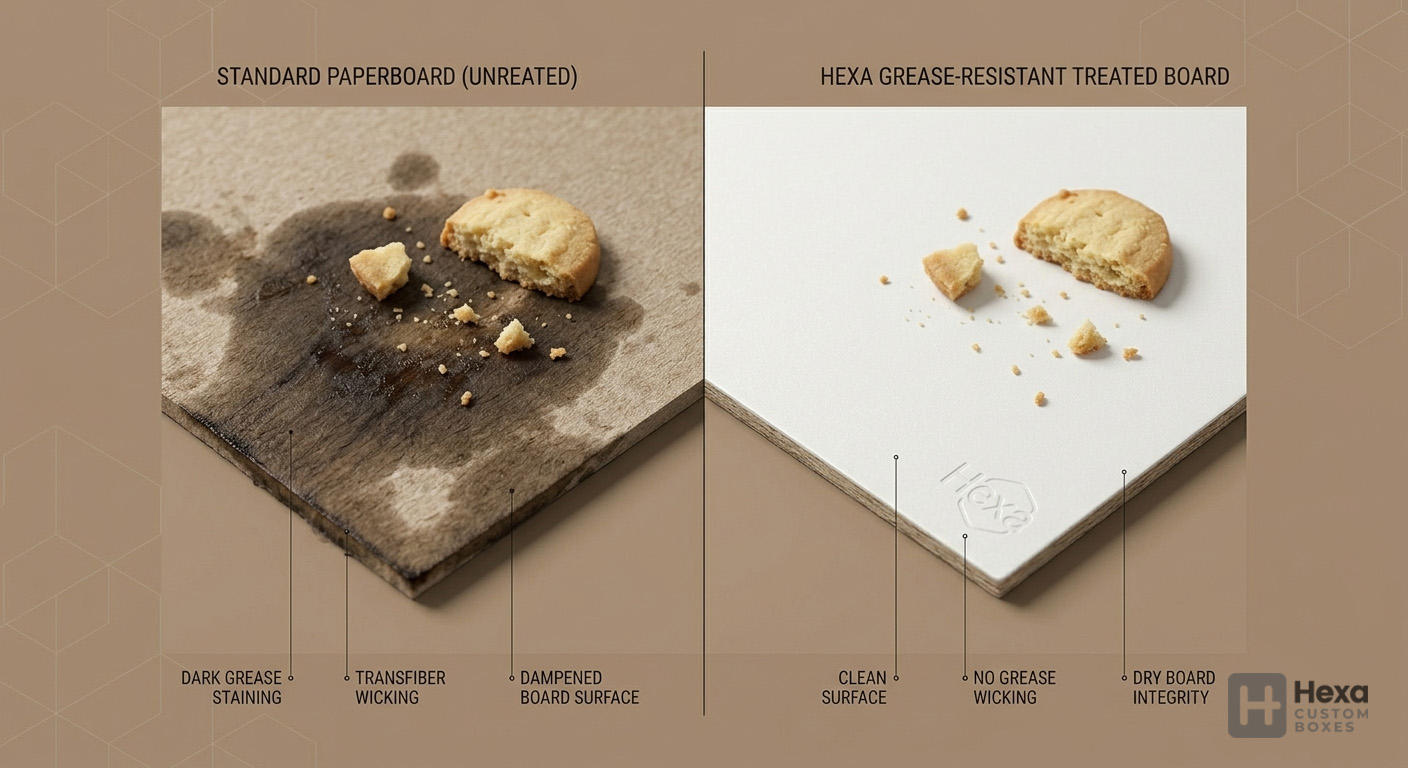
- Lipid (Grease) Migration: Butter and oils “wick” into paper fibers, creating messy dark spots and weakening the box corners.
- Structural Deflection: Many bakery items are top-heavy (cupcakes) or fragile-base (tarts). The box must act as a rigid “Exoskeleton.”
2. The Hexa Blueprint: Every Product, Every Box
Use this table as your instant technical reference for matching products to their ideal structural solution.
| Bakery Product | Recommended Box Style | Ideal GSM / Material | Essential Feature |
| Individual Donuts | Straight Tuck End (STE) | 280gsm SBS | Grease-Resistant Coating |
| Large Celebration Cake | Corrugated REFT | 32 ECT B-Flute | Front-Loading Flap |
| Artisan Bread | Micro-Perforated Bag | 40gsm Kraft | Humidity Control |
| Macarons (Set of 12) | Sleeve & Drawer | 350gsm SBS | Internal Dividers |
| Cookies / Brownies | Window Box | 300gsm Kraft | Anti-Fog PET Window |
| Pastries / Croissants | Six-Corner Beer Box | 300gsm Kraft | High Breathability |
| Cupcakes | Insert-Lock Box | 325gsm SBS | Finger-Notch Access |
3. Deep Dive: Box Styles Explained
Different geometries serve different functional purposes in the kitchen.
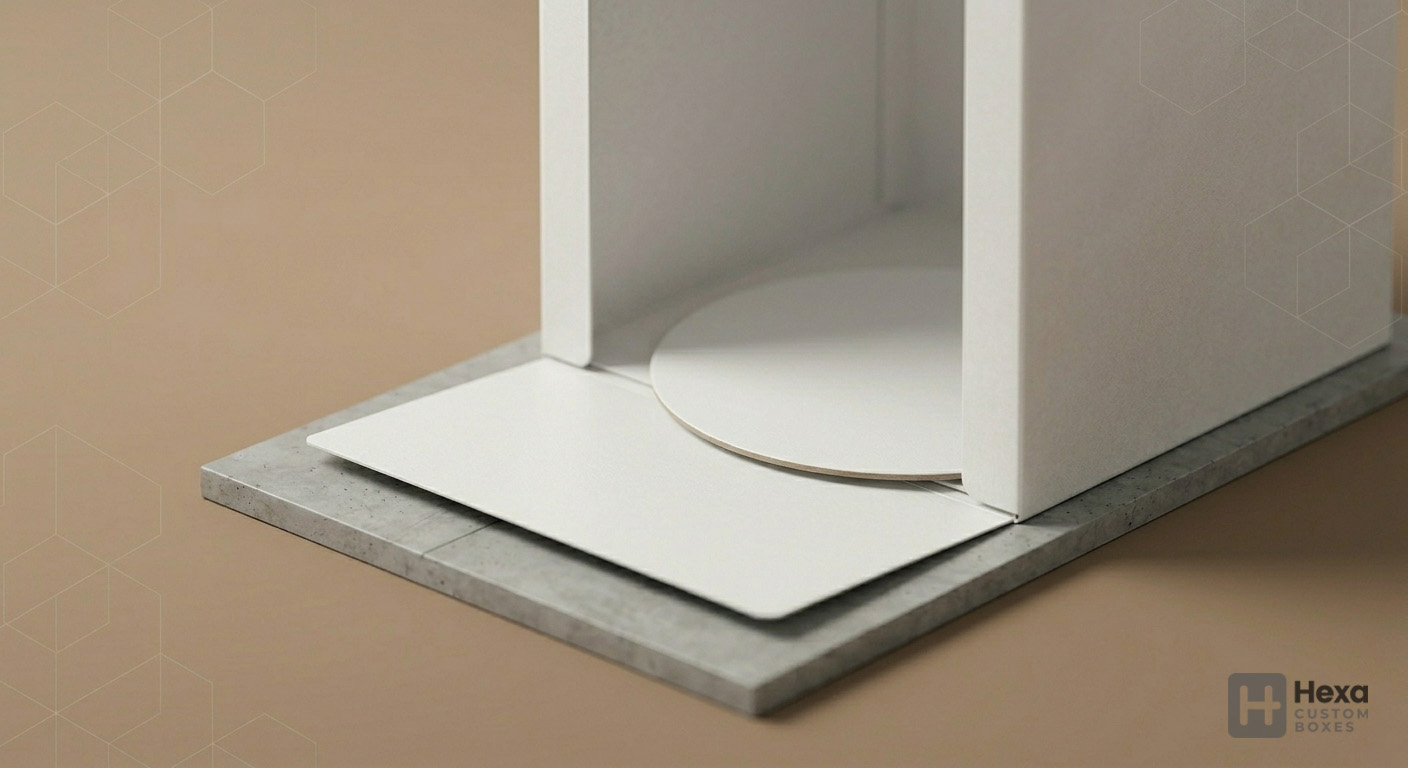
A. The Front-Loading Cake Box
For heavy, multi-tiered cakes, a “Top-Loading” box is a disaster waiting to happen.
- The Engineering: We design these with a “drop-down” front panel. You slide the cake in on its base, then fold the walls up around it.
- Best For: Wedding cakes, heavy cheesecakes, and delicate floral frostings.
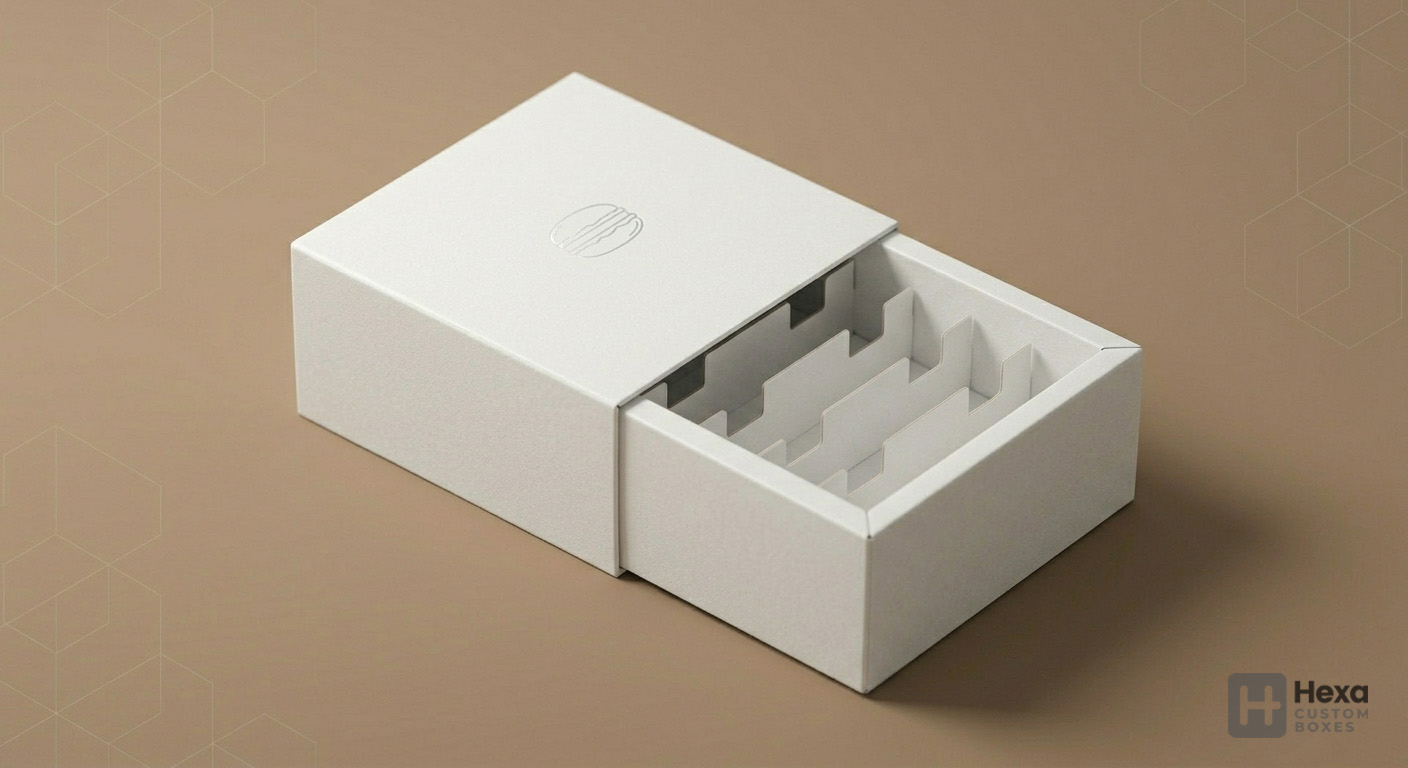
B. The Sleeve & Drawer (The Macaron Specialist)
This is the “Luxury” choice. The internal tray slides out from a rigid sleeve.
- The Engineering: This provides double-wall protection on the sides, which is essential for fragile shells like macarons or meringues.
- Best For: High-end gifts, chocolates, and petite-fours.
C. The Windowed Tuck-Top
The classic retail choice. It combines visibility with speed of assembly.
- The Engineering: We use High-Clarity PET for the window. It’s important that the window is “patched” with food-safe adhesive so it doesn’t peel off if the box gets cold in a display fridge.
- Best For: Everyday donuts, brownies, and tea cakes.
4. Material Selection: SBS vs. Kraft vs. Corrugated
Choosing the right “Substrate” is the biggest cost-driver in your budget.
- SBS (Solid Bleached Sulfate): Pure white and clay-coated. This is the best for high-definition color printing and “Medical-Grade” cleanliness.
- Kraft (Unbleached): Naturally brown and eco-friendly. It has longer fibers, making it stronger than SBS at the same weight. It conveys an “Artisanal” brand image.
- Corrugated (Micro-Flute): “Paper with a Backbone.” Use this for anything heavy or anything that needs insulation (like hot pies).
5. Common Mistakes to Avoid (The “Box Failure” Report)
- Ignoring Grain Direction: If the paper grain runs the wrong way, the box will “belly-out” and collapse when stacked.
- Over-specifying for Cold Foods: You don’t need a heavy 400gsm box for a cold salad or cold wrap. A lighter 250gsm box is more cost-effective.
- Cheap Window Film: Low-quality film “fogs up” when the bakery item is warm, hiding your beautiful product from the customer.
6. How to Test Your Packaging (The DIY “Hexa Audit”)
Before you commit to a large order, run these three tests:
- The Refrigerator Test: Place your boxed product in a fridge for 12 hours. Does the box become “floppy”? If so, you need a PE-coating.
- The Car Ride Test: Drive for 15 minutes with the box in your passenger seat. If the product slides or the frosting hits the lid, your Insert Tolerance is too loose.
- The Wicking Test: Leave a high-fat item (like a butter cookie) in the box for 24 hours. If dark oil spots appear on the outside, you need a grease-barrier treatment.
7. Cost Optimization: How to Save Money
At Hexa Custom Boxes, we help you find the “Goldilocks Zone” of packaging.
- Standardize Sizes: Use the same box for multiple products to increase your order volume and lower the price per unit.
- Minimalist Ink: A one-color “Minimalist” design on high-quality Kraft often looks more premium than a full-color box and costs 20% less.
- Multi-Purpose Inserts: Buy one “Master Box” size and use different inserts to hold 6, 12, or 24 cookies.
8. Glossary of Bakery Packaging Terms
| Term | What it means for you |
| Window Patching | The process of adding a clear film so customers can see your bake. |
| PE Coating | A thin plastic layer that makes the box 100% waterproof and greaseproof. |
| Dust Flaps | The small side-wings on a box that prevent flour or dust from entering. |
| Score Lines | The indentations where the box folds, vital for a “Crisp” look. |
| Friction Lock | A design that stays closed without needing tape or stickers. |
Conclusion: Engineering Your Bakery’s Success
Your customer eats with their eyes first, and the box is the frame for your masterpiece. At Hexa Custom Boxes, we don’t just sell you a container, we provide Structural Peace of Mind.
Ready to find the perfect box for your brand?
Contact our engineering team today for a structural audit of your current bakery packaging.